

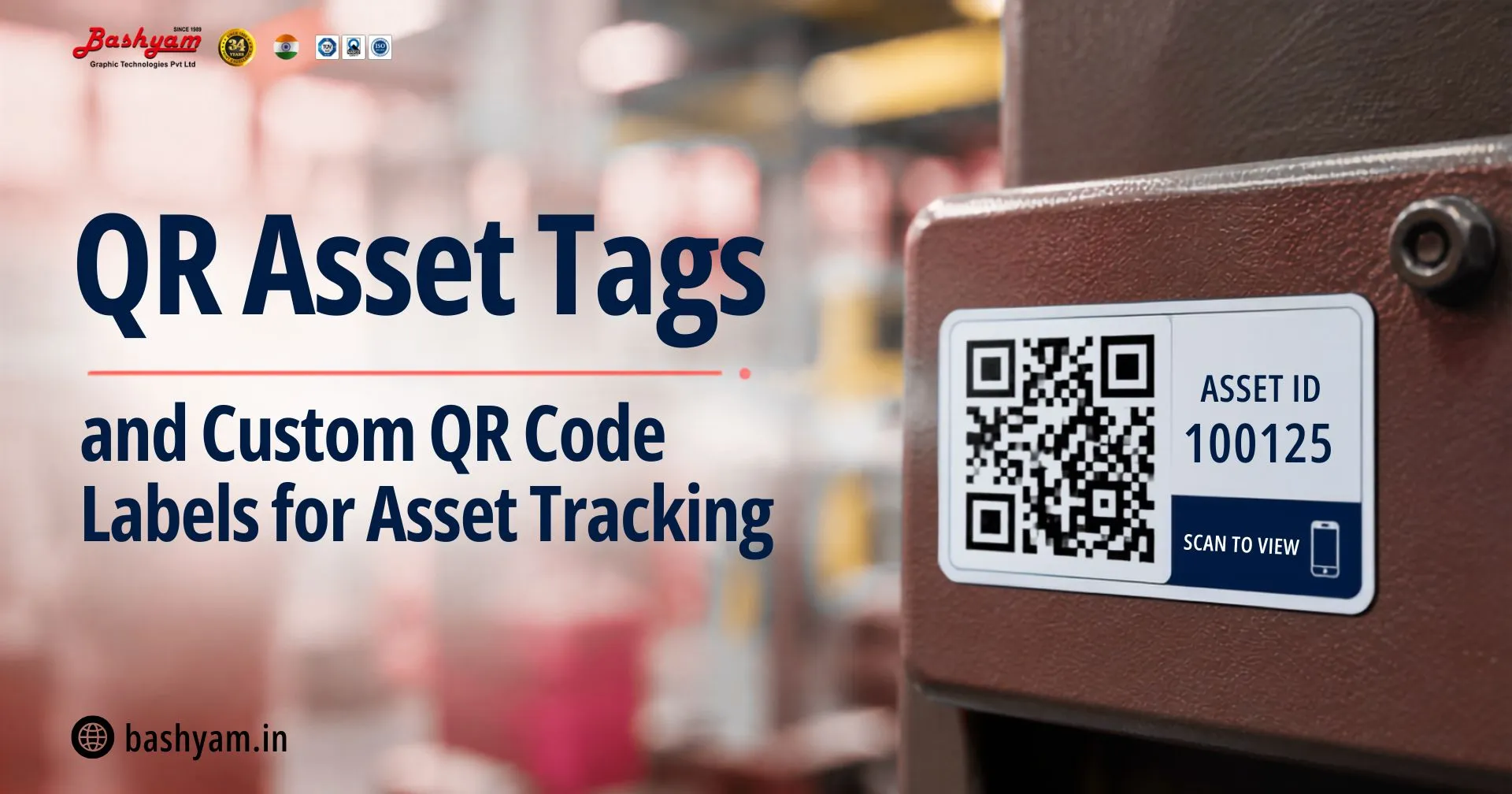
Every growing business eventually faces the same operational challenge: keeping track of equipment, tools, and inventory without spending hours on manual audits. This is exactly where QR asset tags come in. By attaching a scannable label to each piece of equipment, teams can instantly access maintenance history, location, ownership details, and other critical asset information using nothing more than a smartphone camera.
Whether you manage a warehouse, a construction fleet, a hospital's medical devices, or an office full of IT hardware, effective asset tracking depends on speed, accuracy, and ease of use. That's the real value of QR asset tags they transform a physical object into a digital record that can be accessed in seconds.
Working with a trusted asset tag manufacturer also ensures your labels are built to withstand demanding environments. High quality materials, durable adhesives, and precision printing help asset tags remain readable and securely attached, even in warehouses, factories, outdoor locations, and industrial settings.
QR asset tags are durable, printed labels containing a unique QR code that links directly to an asset's digital profile. When scanned, the code can open a URL, display an asset ID number, or connect to an asset management system where staff can view specifications, warranty status, service logs, and current location.
Unlike a plain barcode, a QR code can store more information and be read from almost any angle, even if part of the label is scuffed or partially damaged. This makes QR code asset tags far more practical for environments where labels are exposed to dust, moisture, chemicals, or heavy handling. For demanding industrial applications, many businesses choose polycarbonate asset stickers because they offer excellent durability, scratch resistance, and long-lasting performance in harsh operating conditions.
Manual asset tracking spreadsheets, handwritten logs, or memory breaks down as a company scales. A single missing tool or misplaced laptop can cost hours of searching and, in regulated industries, create compliance risks.
Adopting QR code asset tags solves this by giving every item a digital identity. Instead of asking "where is this?" a technician simply scans the tag and gets an immediate answer. This shift from reactive searching to proactive tracking is one of the biggest reasons operations teams are moving away from outdated tagging systems.
Here's what organizations typically gain after switching to a QR-based tracking system:
These benefits compound over time. The more consistently QR asset tags are applied across a fleet or facility, the more reliable the data becomes, which in turn improves forecasting, budgeting, and compliance reporting.
Inventory accuracy is one of the most measurable outcomes of a tagging rollout. When every item carries QR asset labels, staff no longer rely on guesswork or outdated paper trails. A scan updates the record instantly, so the system reflects reality rather than what was last entered manually weeks ago.
This matters most during stock counts and internal audits. Instead of physically verifying serial numbers against a printed list, a warehouse worker can walk the floor scanning each item, and the software automatically flags discrepancies. That kind of accuracy is difficult to achieve with handwritten logs or standalone barcode systems.
Asset tagging isn't limited to one type of business. Some of the most common applications include:
Across every one of these sectors, the underlying goal is the same: reduce the time between "something happened to this asset" and "someone knows about it."
Not every label is built for the same environment, so choosing the right QR code asset tags depends on where and how they'll be used. Understanding the application requirements and knowing what a metal barcode label is and why it is used can also help businesses select the most durable identification solution for industrial and outdoor assets.
Before ordering, evaluate the following factors:
Getting these decisions right the first time helps prevent costly reprints and ensures your asset tags remain readable, securely attached, and reliable for years of daily use.
Durability is where most tagging projects succeed or fail. Cheap paper labels might work for a one-time event, but for long-term asset management, QR asset labels need to survive weather, friction, and repeated handling. Organizations that want greater flexibility often combine QR codes with traditional barcodes, as explained in How Asset Tags with Barcode Improve Asset Identification, enabling compatibility with both smartphone based and barcode scanner based asset tracking systems.
A good rule of thumb is to match the tag's expected lifespan to the asset's own service life. A forklift that will be in use for ten years shouldn't carry a label rated for only two years.
Even well-planned rollouts run into avoidable issues. Watch out for:
Avoiding these pitfalls early saves significant reprinting and relabeling costs down the line.
Different environments require different label materials. Choosing the right option ensures long-term performance.
| Feature | QR Asset Tags | Barcode Labels |
|---|---|---|
| Data Capacity | Higher, can store URLs, asset IDs, maintenance records, and other detailed information | Limited to basic numeric or alphanumeric data |
| Scan Angle | Can be scanned from multiple angles (360°) | Requires proper alignment for accurate scanning |
| Damage Tolerance | Remains readable even if partially damaged due to error correction | May become unreadable if scratched or damaged |
| Smartphone Compatibility | Easily scanned using most smartphone camera apps | Typically requires a dedicated barcode scanner |
| Mobile-Friendly Workflows | Excellent for mobile asset management and field operations | Limited mobile functionality and flexibility |
For most modern operations, especially those relying on mobile devices in the field, QR asset tags offer a clear practical advantage over legacy barcode systems.
Our team can help you choose the right material, size, adhesive, and printing options to ensure your asset tags perform reliably in any environment. Contact us today for a customized solution and a competitive quote on premium QR asset tags and labels.
1. How do QR code asset tags work?
QR code asset tags work by linking a unique QR code to a digital asset record. When the code is scanned with a smartphone or QR scanner, it instantly opens information such as the asset ID, location, maintenance history, warranty details, assigned user, or an asset management system. Bashyam Graphics manufactures durable QR code asset tags that help businesses identify, track, and update assets quickly without manual data entry.
2. What is a QR code tag?
A QR code tag is a durable label printed with a Quick Response (QR) code that identifies a physical asset or item. The QR code can store information directly or link to a webpage, database, or asset management platform. Bashyam Graphics offers custom QR code tags for asset tracking, inventory management, maintenance, and equipment identification across various industries.
3. How are QR asset tags manufactured?
QR asset tags are manufactured by generating a unique QR code, printing it on a durable material such as polyester, polycarbonate, aluminum, or stainless steel, and applying protective finishes for long-lasting performance. The finished tags are then tested for scan accuracy before being attached to assets for identification and tracking.
4. What is the purpose of asset tags?
The purpose of asset tags is to uniquely identify, track, and manage physical assets throughout their lifecycle. Asset tags help businesses maintain accurate inventory records, monitor equipment locations, schedule maintenance, reduce asset loss, improve accountability, and simplify audits. With durable solutions from Bashyam Graphics, businesses can improve operational efficiency while ensuring long-lasting asset identification.
5. Why are QR code asset tags better than traditional barcode labels?
QR code asset tags offer greater data capacity, faster scanning, and better durability than traditional barcode labels. Unlike linear barcodes, QR codes can store more information, support URLs and digital records, scan from multiple angles, and remain readable even if partially damaged. They also work with most smartphone cameras, making them a practical and cost-effective solution for modern asset management systems. Bashyam Graphics manufactures high-quality QR code asset tags designed for reliable performance in office, industrial, and outdoor environments.