

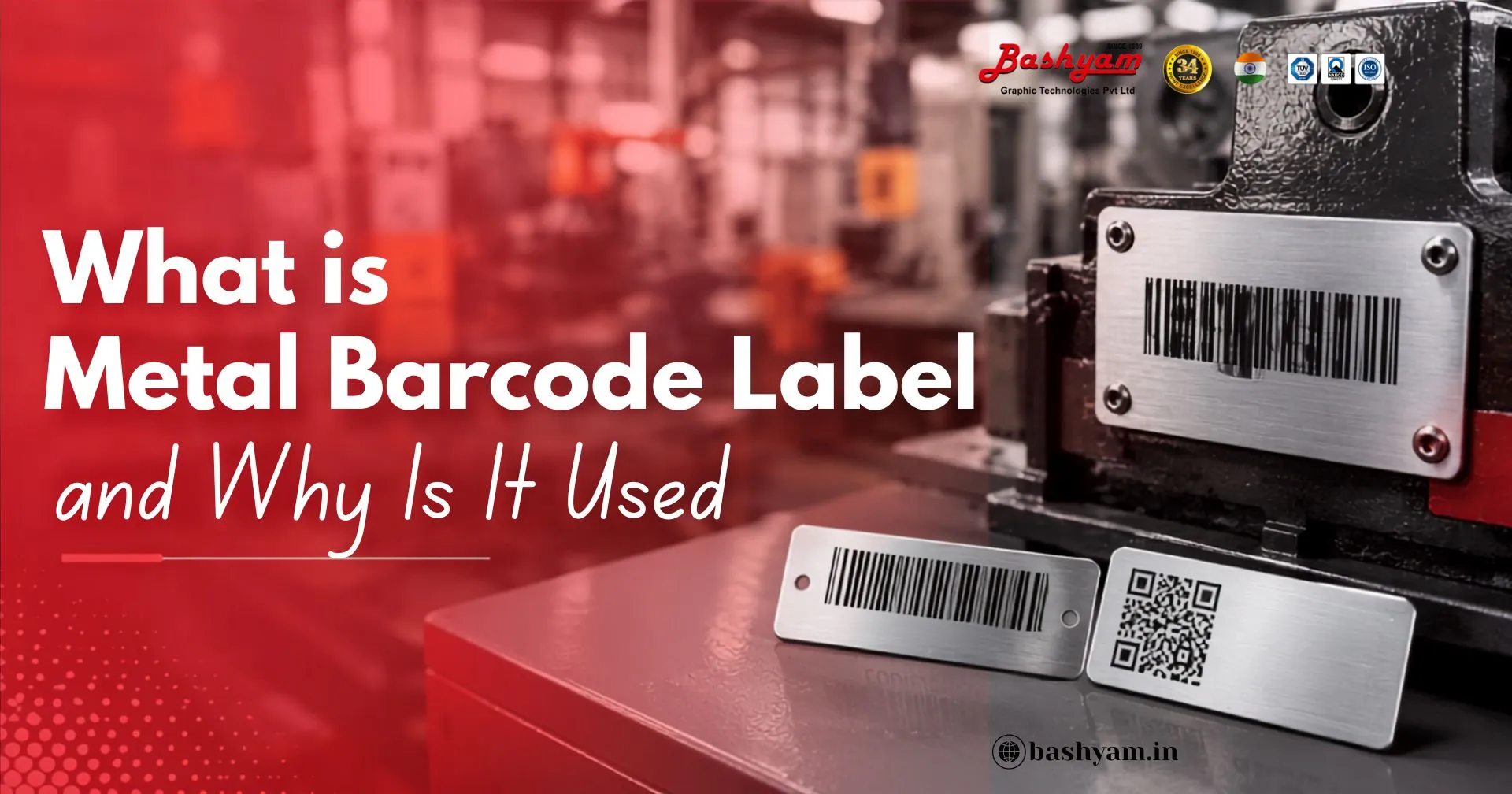
Metal barcode labels play an important role in modern industries where equipment, machinery, and assets must be identified accurately for years. Unlike paper or plastic labels, a metal barcode label is designed to withstand extreme temperatures, chemicals, abrasion, moisture, and outdoor environments without losing readability. Whether it is manufacturing, automotive, aerospace, healthcare, logistics, or construction, businesses rely on durable identification solutions to improve asset management and operational efficiency.
In this guide, you'll learn what a metal barcode label is, how it works, where it is used, and why it has become the preferred choice for industrial identification.
A metal barcode label is a durable identification plate manufactured using metals such as aluminum, stainless steel, or anodized aluminum. It contains a printed, laser etched, or engraved barcode along with important information such as serial numbers, asset IDs, product details, QR codes, or company branding. Unlike conventional barcode stickers, these labels are engineered to remain readable even after years of exposure to harsh industrial conditions.
They are commonly attached to machinery, electrical panels, industrial equipment, tools, vehicles, medical devices, and fixed assets. The barcode can be scanned using standard barcode scanners or mobile devices, allowing organizations to retrieve accurate information instantly.
Industries use a metal barcode label because it offers exceptional durability and long term reliability. Equipment often operates in environments where ordinary labels quickly fade, peel, or become unreadable. Some of the main reasons businesses choose metal labels include:
These advantages reduce replacement costs while improving operational efficiency.
Different industries require different materials depending on their working conditions.
1. Stainless Steel Labels
Stainless steel labels provide maximum durability and corrosion resistance. They are ideal for oil and gas plants, marine applications, chemical processing facilities, and heavy machinery.
2. Anodized Aluminum Labels
These lightweight labels feature graphics sealed beneath the anodized surface, protecting them from fading and wear. They are commonly used for industrial assets and electronic equipment.
3. Aluminum Barcode Labels
Aluminum labels offer an excellent balance between durability and cost. They are widely used for inventory control, warehouse equipment, and manufacturing assets. Businesses choose aluminium barcode labels long term durability because they withstand daily wear, harsh industrial conditions, and frequent barcode scanning while maintaining excellent readability for years.
4. Laser Marked Labels
Laser marking creates permanent identification with high precision, making these labels suitable for applications requiring long term traceability.
A metal barcode label is used in almost every industry where permanent identification is required.
1. Manufacturing
Factories use metal labels for identifying production machinery, CNC machines, generators, compressors, electrical cabinets, and industrial tools.
2. Asset Management
Organizations assign unique barcode numbers to fixed assets, making inspections, maintenance, and audits much easier.
3. Healthcare
Hospitals and laboratories label medical equipment, diagnostic devices, surgical instruments, and laboratory assets for accurate tracking.
4. Automotive Industry
Manufacturers identify vehicle components, engines, transmission systems, spare parts, and production equipment using durable barcode solutions.
5. Logistics and Warehousing
Storage facilities use metal barcode tags on racks, pallets, containers, and reusable transport equipment to simplify inventory management.
6. Utilities and Infrastructure
Power plants, telecom towers, electrical substations, and water treatment facilities depend on permanent identification for maintenance records.
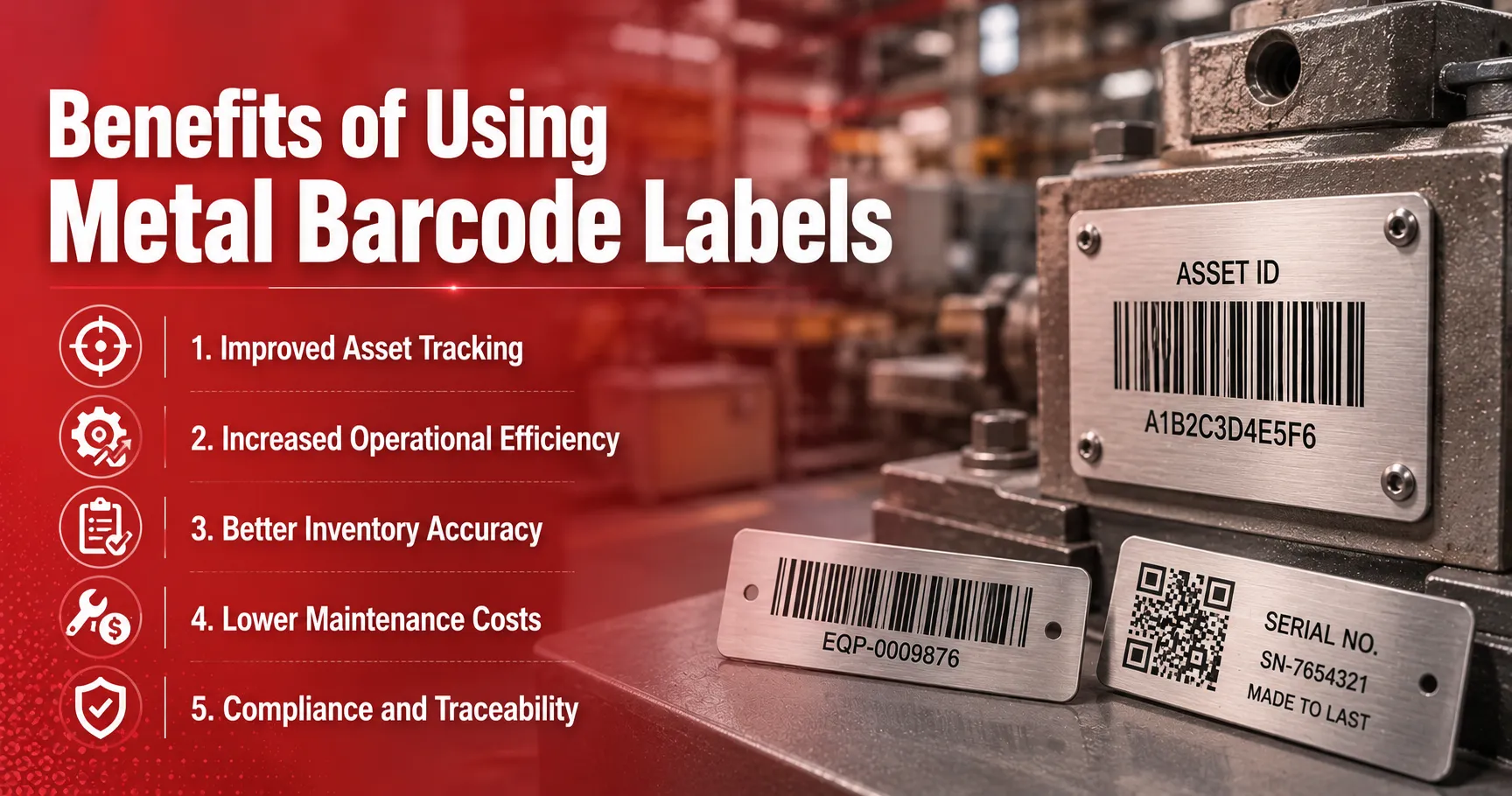
Businesses gain several long term advantages by investing in durable barcode identification.
1. Improved Asset Tracking
Every asset receives a unique barcode, making it easier to monitor movement, maintenance history, and ownership. Using durable barcode labels ensures the barcode remains clear and scannable even in demanding industrial environments, supporting accurate asset tracking over the long term.
2. Increased Operational Efficiency
Employees can scan equipment within seconds instead of manually recording information, reducing errors and saving time.
3. Better Inventory Accuracy
Accurate barcode scanning minimizes data entry mistakes while improving inventory visibility across departments.
4. Lower Maintenance Costs
Since the labels remain intact for years, organizations spend less on replacing damaged or faded identification labels.
5. Compliance and Traceability
Many industries require permanent product identification for regulatory compliance. Durable barcode labels help maintain complete traceability throughout the equipment lifecycle.
Many businesses initially use paper or plastic barcode stickers because they are inexpensive. However, these labels often fail when exposed to industrial environments. A metal barcode label offers several advantages over standard labels:
To achieve reliable performance, choosing the right manufacturing process is equally important. Understanding metal labels manufacturing methods from Bashyam Graphics helps businesses select durable identification solutions that meet industrial standards and deliver long-term performance. For critical equipment and valuable assets, investing in durable identification significantly reduces long-term costs.
Modern organizations depend on efficient asset management systems. Metal barcode tags simplify this process by providing permanent identification for every asset. They clearly demonstrate how asset tags with barcode improve asset identification by enabling accurate tracking, faster scanning, and reliable record management throughout an asset's lifecycle.
When integrated with inventory software or ERP systems, barcode scanning enables organizations to:
Because metal barcode tags remain readable over long periods, businesses avoid interruptions caused by damaged labels, ensuring consistent asset identification and operational efficiency.
Selecting the correct identification solution depends on several factors. Consider the following before ordering:
Working with an experienced manufacturer helps ensure the labels meet your operational requirements.
Not all barcode labels are manufactured to the same standards. High quality materials, precise barcode printing, and permanent marking technologies ensure consistent scanning performance throughout the product's life. Businesses that invest in premium metal barcode tags benefit from fewer scanning failures, lower replacement costs, and improved operational reliability.
Manufacturers like Bashyam Graphics provide customized identification solutions tailored to different industrial environments. From stainless steel and aluminum labels to permanent metal barcode tags, choosing the right solution helps organizations improve traceability, compliance, and asset management.
If you're looking for durable industrial identification solutions, Bashyam Graphics offers metal barcode label solutions designed for long lasting performance. Contact Bashyam Graphics today to discuss your requirements and get reliable metal barcode labeling solutions built for demanding industrial environments.
1. What are the different types of barcode labels?
Barcode labels include paper, polyester, vinyl, aluminum, stainless steel, and other metal barcode labels for industrial applications.
2. What is a metal label?
A metal label is a durable identification plate used to display barcodes, serial numbers, QR codes, and product information.
3. How are metal stickers made?
Metal stickers are made using processes such as laser engraving, anodizing, chemical etching, or UV printing on aluminum or stainless steel.
4. How do you print on metal labels?
Metal labels are printed using laser marking, UV printing, screen printing, or chemical etching for long-lasting results.
5. What are the best metal labels?
Stainless steel and anodized aluminum labels are considered the best for durability, corrosion resistance, and long-term asset identification.