

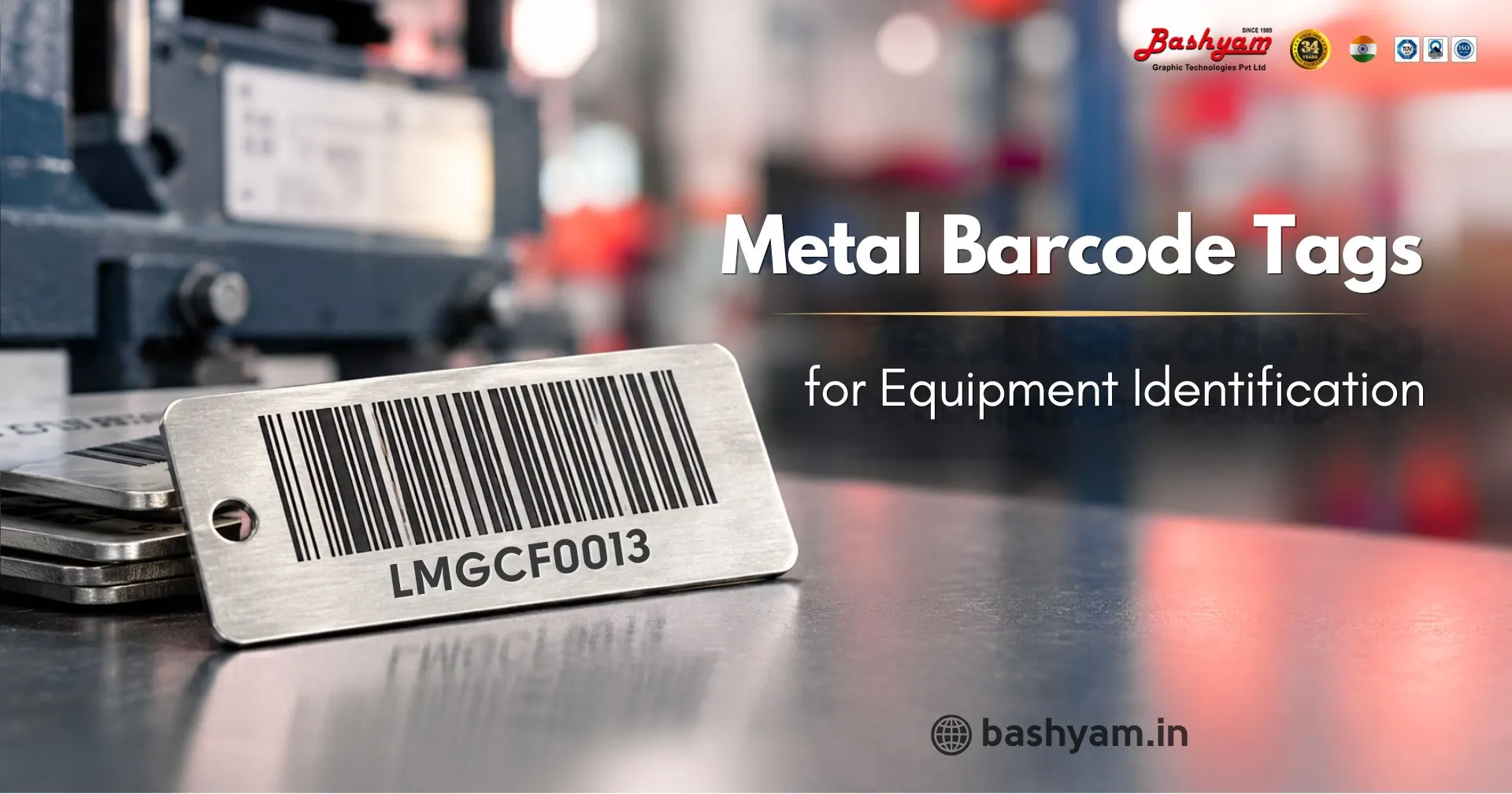
Modern businesses rely on accurate equipment identification to manage machinery, tools, electrical assets, storage systems, and other valuable resources. When identification labels become damaged or unreadable, employees may spend additional time locating records, checking serial numbers, or confirming equipment manually. Metal barcode tags provide a durable identification solution that connects physical assets with digital records.
Unlike temporary paper labels or ordinary stickers, properly manufactured metal identification plates can be selected according to the operating environment, marking requirements, and expected service life. For businesses that also require durable labelling for products, containers, or other applications, sticker label manufacturers in chennai can provide suitable labelling options based on the intended use. Metal barcode tags are widely suited to manufacturing plants, warehouses, engineering facilities, utilities, healthcare environments, commercial buildings, and other locations where dependable asset identification matters.
Metal barcode tags are identification plates manufactured from materials such as aluminium, anodized aluminium, stainless steel, or brass. They can contain barcodes, QR codes, serial numbers, asset numbers, logos, text, or other variable information. For businesses researching what is metal barcode label and why is it used, these tags offer a practical way to give physical assets a clear and trackable identity.
A tag with a barcode gives each asset a machine-readable identity. When the code is scanned using a barcode reader or compatible mobile device, the corresponding asset record can be accessed from an inventory, maintenance, ERP, or asset management system.
The physical plate therefore becomes more than a label. It acts as a link between equipment in the real world and information stored digitally, helping organizations maintain accurate asset records and simplify identification processes.
Industrial assets can operate in conditions that are unsuitable for conventional labels. Machinery may be exposed to heat, moisture, dust, oils, cleaning chemicals, ultraviolet light, friction, and repeated handling.
The material and marking method should therefore be selected according to the environment rather than simply choosing a label based on appearance.
Bashyam provides metal barcode identification solutions for applications where durable equipment labeling and traceability are required.
A barcode converts information into a machine readable pattern. Depending on the application, businesses may use linear barcodes or two dimensional codes.
The appropriate format depends on the amount of information required, available label space, scanning equipment, and operating process.
A tag with barcode should also include a human readable identification number where appropriate. This gives employees an alternative way to identify an asset if scanning equipment is temporarily unavailable.
Choosing the right material is one of the most important decisions when ordering metal barcode tags.
Businesses can review custom metal labels from Bashyam when selecting materials, finishes, dimensions, and marking requirements for a particular application.
A reliable identification plate requires more than simply placing a barcode on a piece of metal. Manufacturing involves several stages that influence the final result.
This production approach is particularly important when hundreds or thousands of individually numbered assets are involved.
Metal barcode tags can support identification across a wide range of equipment and assets.
For organizations requiring dedicated asset identification solutions, asset tags for equipment tracking can be considered according to the asset type and installation environment.
A tag with barcode becomes especially valuable when it is connected to a structured asset management system.
During an inspection, an employee can scan the identification plate and retrieve the relevant record. This reduces dependence on manual searches and helps keep equipment information organized.
The marking process should match the expected working conditions.
Laser marking can provide precise identification and is suitable for detailed variable information.
Engraving physically removes material to create permanent identification and can be considered where long term readability is a priority.
Etching can produce detailed markings while maintaining a professional finish.
Specialized printing can support color, graphics, logos, and detailed visual information when appropriate.
The correct process depends on the substrate, environmental exposure, required appearance, barcode format, and expected lifespan.
The way an identification plate is installed can affect its service life.
Adhesive mounting may be suitable for smooth equipment surfaces where drilling is undesirable. Mechanical fixing can be considered for applications requiring additional physical security.
For applications where adhesive identification is preferred, metal sticker solutions can provide another option for equipment and asset labeling.
Professional identification programs should include quality verification before labels are attached to equipment.
For large projects, a sample approval process can be useful before full production begins. It allows the customer to verify size, material, barcode readability, mounting method, and overall appearance before the complete batch is manufactured.
A successful identification system begins with consistent standards. First, assign a unique identification number to every asset. Avoid duplicate numbers because they can create confusion in maintenance and inventory records.
Next, establish a consistent barcode format and naming convention. Employees should be able to understand how physical identification corresponds with the company's digital records.
The plate should also be positioned where it can be scanned without creating unnecessary safety risks. Avoid locations that are regularly covered, exposed to excessive friction, or difficult for maintenance personnel to access.
Conventional paper and plastic labels can be appropriate for controlled indoor environments and temporary identification. However, demanding industrial applications may require a more durable solution.
| Requirement | Conventional Label | Metal Identification |
|---|---|---|
| Indoor temporary use | Suitable | Suitable |
| Long term equipment identification | Depends on material | Commonly suitable |
| Abrasion exposure | Limited by label type | Better suited with appropriate specification |
| Outdoor conditions | Application dependent | Material can be selected for environment |
| Permanent marking | Limited | Engraving, etching, or laser marking options |
| Industrial equipment | Application dependent | Widely used |
The objective is not to use metal for every situation. The correct choice depends on the equipment, environment, identification lifespan, and budget.
When purchasing metal barcode tags, businesses should evaluate more than the basic appearance of the product.
A manufacturer with experience in industrial identification can also help determine whether the selected material and marking method are appropriate for the intended environment.
Bashyam's legend plates and identification solutions can complement equipment labeling where additional technical information, operating instructions, or identification details are required.
Metal barcode tags provide durable, reliable identification for machinery, tools, equipment, and other valuable assets. The right material, barcode format, marking method, and mounting option can help ensure long lasting readability and easier asset tracking.
Planning customized equipment identification? Contact Bashyam to discuss your metal barcode tags, sizes, materials, barcode requirements, and mounting options.
1. Are metal barcode tags suitable for outdoor equipment?
They can be suitable for outdoor applications when the material, marking process, and mounting method are selected according to weather exposure and operating conditions.
2. Which metal is best for barcode identification?
There is no single material that suits every application. Aluminium, anodized aluminium, stainless steel, and brass each have different characteristics. Selection should consider corrosion, exposure, weight, appearance, marking method, and expected service life.
3. Can serial numbers be added to every tag?
Yes. Variable serial numbers, asset IDs, barcodes, QR codes, and other information can be incorporated according to the manufacturing specification.
4. Can the barcode be scanned with a mobile phone?
Many barcode and QR code formats can be scanned using compatible mobile applications. The actual scanning capability depends on the code type, software, device, and barcode quality.
5. Can metal tags be customized?
Yes. Size, shape, material, finish, artwork, barcode, serial numbering, mounting holes, adhesive backing, and other specifications can be customized according to the project.
6. How should I choose the right identification solution?
Start with the environment, asset type, expected lifespan, scanning method, mounting surface, and required information. These factors help determine the appropriate material, marking process, barcode format, and fixing method.